
Quick answer: A high-pitched squeal when you brake is often the pad wear indicator telling you the pads are low. It can also come from glazed pads, missing or worn shims, dry slides, or light rust after rain. Grinding usually means the pads are worn through and metal is cutting into the rotor: stop driving and have the brakes inspected right away.
Brake noises at a glance
| Noise | When you hear it | Likely cause | How urgent |
|---|---|---|---|
| Squeak or squeal | First few stops on a damp morning, then gone | A thin layer of surface rust on the rotors (Mazda) | Normal if it clears after a few stops |
| Steady high-pitched squeal | Whenever you brake | The metal wear indicator touching the rotor (Mazda, Nissan, Wagner) | Replace the pads soon |
| Squeal after hard braking, sometimes with a burning smell | After repeated hard braking or heavy loads | Overheated, glazed pads (Mazda, Wagner) | Let the brakes cool; have them inspected |
| Squeal or squeak with plenty of pad left | Any time, including after a recent brake job | Missing or damaged shims, loose pad fit, dry or rusty slides, missing hardware | Inspect the hardware |
| Rattle or click | While driving or braking | Loose pads, shims or clips (Mazda, Wagner) | Inspect soon |
| Scraping | After driving on gravel, sand or dirt roads | Debris caught in the brakes (Mazda) | Have it checked if it doesn’t stop |
| Grinding or growling | Every time you brake | Pads worn through, metal on the rotor (Wagner) | Stop driving on it; inspect right away |
Why brakes squeal
The wear indicator is doing its job
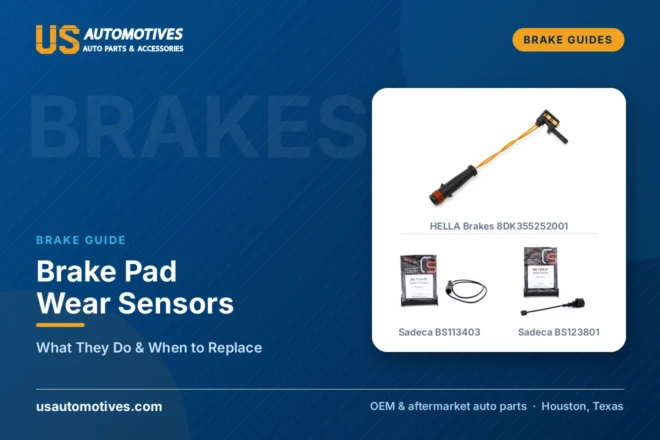
Many pads have a small metal tab that touches the rotor when the friction material is almost gone. Mazda calls the result a “telltale squeak,” and Nissan says its indicators are designed to squeak when the pads are almost worn out and that the pads should then be replaced as soon as possible. Check the pads using our guide on when to replace brake pads.
Moisture and surface rust
Mazda notes that moisture and humidity can leave a thin layer of rust on the rotors, and that the noise usually clears after a few brake applications. If it keeps going once the brakes are warm, look for another cause.
Glazed pads
Glazing is a hard, smooth layer that forms on overheated pads. Mazda links it to aggressive braking or resting a foot on the pedal. Wagner says glazed pads can squeal and may not have the friction needed to stop the vehicle properly, so they need attention.
Shims, clips and slides
A technical article in Vehicle Service Pros lists missing or damaged pad insulator shims, a loose pad-to-caliper fit and rusty, burred or worn caliper slides among the common causes of squeal. It notes that a loose outer pad can vibrate at high frequency against the caliper, and that squeal can happen even with a securely mounted pad if the insulator shim isn’t right. Mazda adds that loose shims can cause rattles.
That is why brake makers tell installers to deal with the hardware. Brembo’s pad fitting instructions say to inspect any shims and replace worn or damaged ones, to replace the pad springs at every pad replacement to prevent noise and vibration problems, and to apply grease only where the vehicle maker indicates.
Pad design
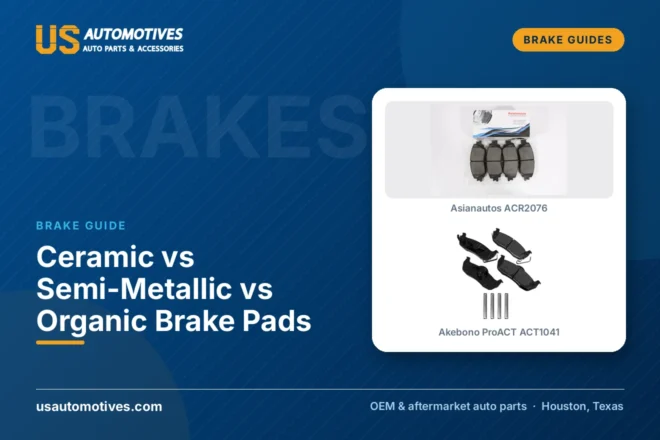
Pad makers also design noise control into the pad. Akebono, for example, says it engineered its ProACT ceramic pads to eliminate noise, vibration and harshness (NVH), and its product descriptions mention chamfers and slots for NVH control.
Why grinding is urgent
Wagner says grinding or growling means the pads have worn through and are grinding into the rotors, and its advice is not to wait. At that point there is little or no friction material left, and metal is cutting into the rotor with every stop. Expect to replace the rotors as well as the pads; the rotor section of our brake repair guide explains how to judge them.
Mazda’s advice is the same for any grinding or loss of braking power: take the car to a professional mechanic as soon as possible.
What to check, step by step
- Note when the noise happens: first stops of the day only, every stop, light or hard braking, or after hard use.
- Check pad thickness and the wear indicator. If the pads are at the limit, the noise is your warning to replace them.
- Look at the rotor surface. Deep grooves suggest worn rotors, and blue spots suggest overheating.
- Check the shims, clips and springs. Look for missing, loose, corroded or damaged parts.
- Check the caliper slides. The caliper should move freely on its slide pins, and the rubber boots should be intact. Lubricate them as the vehicle maker recommends, and replace corroded guide bolts and torn boots.
- Look for debris caught in the brake, especially after driving on sandy or dirt roads, as Mazda describes.
- Don’t resurface the rotors just to stop a squeal. A GM service bulletin quoted by MOTOR magazine says resurfacing is ineffective at correcting brake squeal and should not be used for it unless a specific bulletin says otherwise.
When to see a mechanic
Have the brakes inspected right away if you hear grinding, if the car pulls to one side, if the pedal feels soft or sinks, if a red brake warning light comes on, or if a squeal continues after the brakes are warm. Mazda’s general advice is that any squeaking is a reason to have the vehicle looked at.
Parts you’ll need
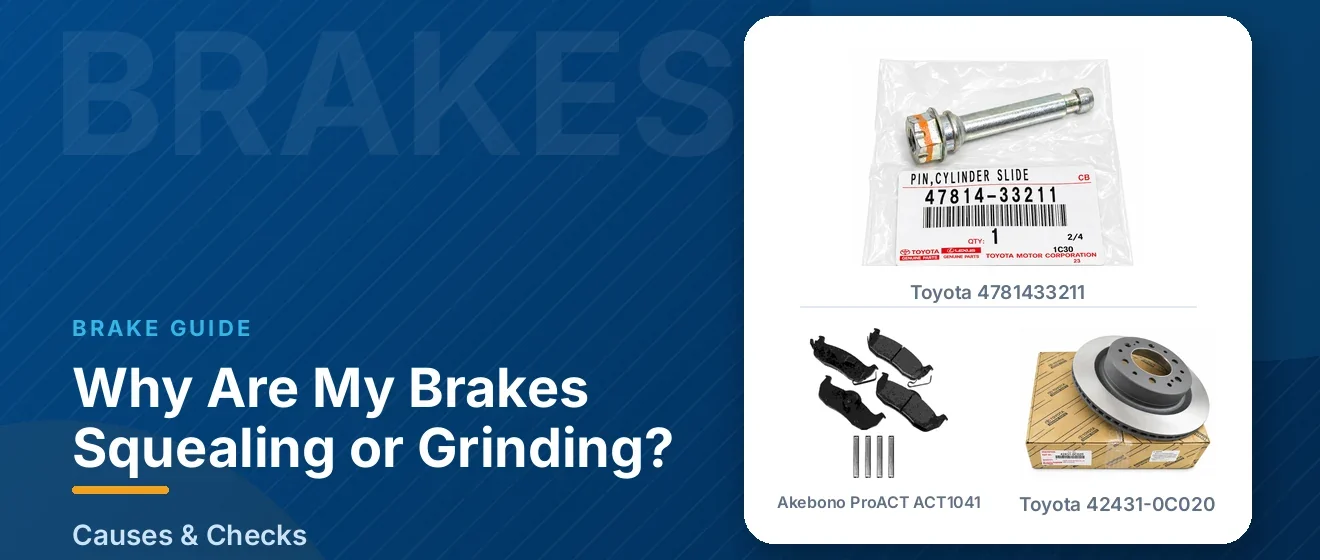
See our disc brake pad sets, disc brake rotors and brake hardware. Examples:
| Part | Brand | Listed for | Price |
|---|---|---|---|
| Akebono ProACT ACT1210A Ceramic Disc Brake Pad Kit | Akebono | Lexus, Pontiac, Scion, Toyota | $72.13 |
| Fremax BD2072 Disc Brake Rotor | Fremax | INFINITI, Nissan | $41.46 |
| Toyota 4781433211 Disc Brake Caliper Pin | Toyota | Lexus, Toyota | $15.88 |
Prices may change; the product page shows the current price. “Listed for” shows the makes on each listing. Check the full fitment list for your year, model and axle before ordering, or send us your VIN and our team will confirm fitment.
FAQ
Why do my new brakes squeal?
New pads can be noisy if shims, clips or springs were left out or reused when worn, or if the slides weren’t lubricated as the vehicle maker recommends. Follow the bedding-in instructions from the pad or vehicle maker, and have the hardware checked if the noise continues.
Why do my brakes squeak only in the morning?
Usually surface rust or moisture on the rotors. Mazda says it typically clears after a few stops. If it doesn’t, look for another cause.
Can I put grease on the pads to stop the squeal?
Never put grease or lubricant on the pad friction material or the rotor faces. Brembo’s instructions say to apply grease only to the metal parts of the pad where the vehicle maker indicates. Find and fix the cause instead.
For more on choosing pads, see ceramic vs semi-metallic vs organic brake pads, and for the full picture read our brake repair guide.
Safety note: Brakes are safety-critical. This guide is general and may not match your vehicle. Follow your vehicle’s service manual and have a qualified technician inspect the brakes if you are unsure. US Automotives is an independent retailer and is not affiliated with any vehicle manufacturer.